The
Green Beans went for our 7th Ubin trip yesterday, and despite being
initially disappointed that out of 50 Green Bean members only 3 had come
along with us, we enjoyed the walk so much and even had NMP (Or
Almira’s Mom haha) Ms Faizah join us for a short while together with
Andy, an experienced birdwatcher. The small group enabled a much better
dynamic and facilitations, and with 5 people altogether, we also got to
know our Year 5 Beans better. Furthermore, we will be having another
Ubin walk next week, with Vanessa, XiaoLi and Monisha guiding the group.
The
day started out with the sight of a Falcon enjoying it’s meal; a
pigeon! Our surprise when we stepped onto the Island and met Andy, an
experienced birdwatcher who immediately pointed out the scene and even
gave us to opportunity to see it close up with his telescope. What an
amazing experience (albeit slightly disturbing one), especially when the
poor pigeon’s feathers began falling down from the tower onto the spot
we were in.
The scene of the bird gore on the tower, and here we see the video of the Falcon enjoying its meal being capture on an iPhone
Going
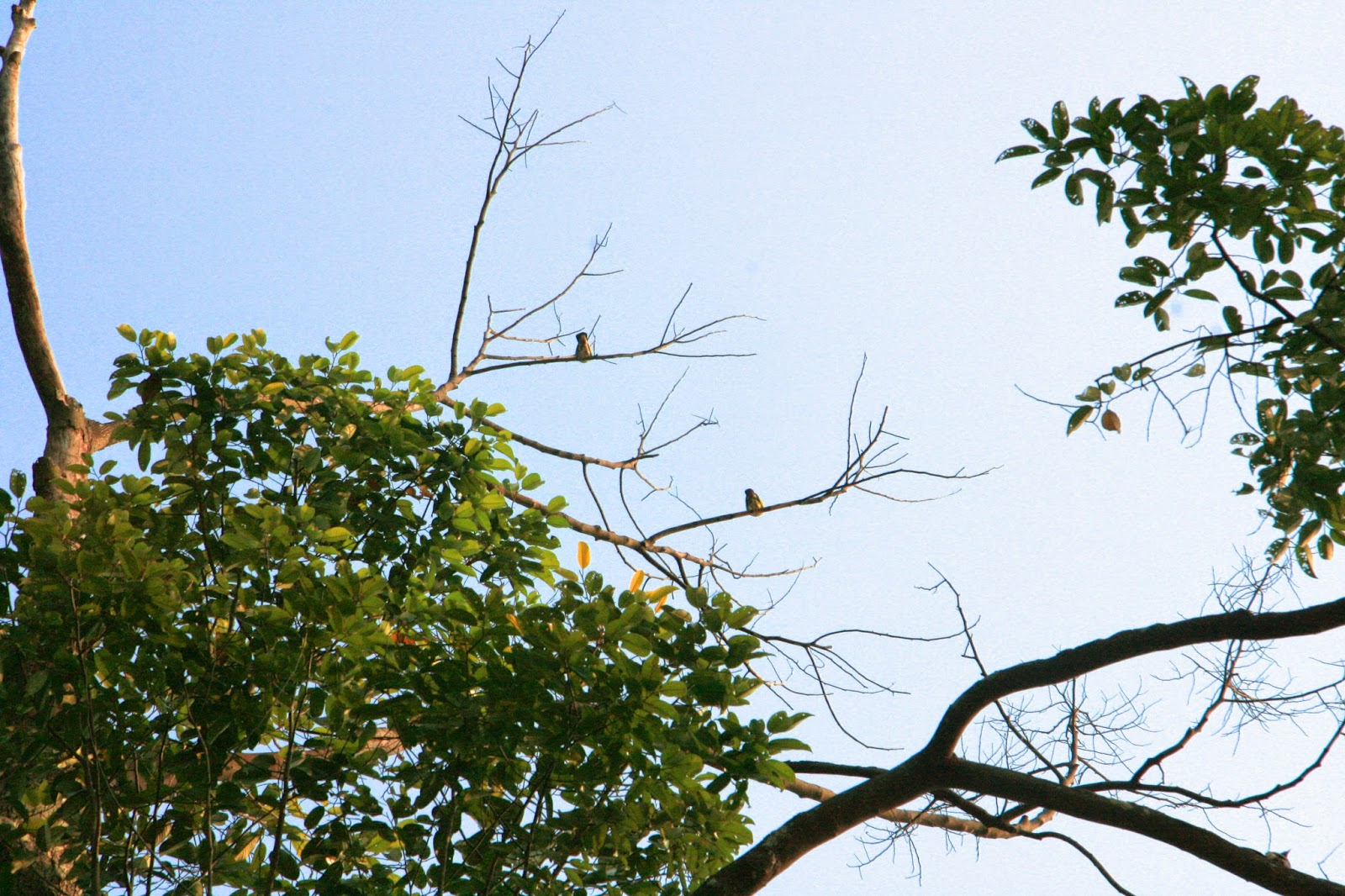
to Pekan Quarry and then Butterfly Hill, we saw loads of egrets and
learnt about the various types of egrets that we do have in Singapore.
Along the way we had the chance to see a artificial hornbill mating box,
purposefully attached to a tree by NParks. Once having 3 recorded
species of Hornbills in Singapore, the Rhinoceros Hornbill, the Helmeted
Hornbill and the Oriental Pied Hornbill, the population has been
narrowed down to merely the Oriental Pied, as the Rhinoceros and
Helmeted Hornbill went extinct before the 1900s and in the 1950s
respectively.
Made
to encourage hornbills to mate, so as to increase the population of the
Oriental Pied which was once believed to be extinct, the artificial
nests has come with much success and over 100 Hornbills now reside in
Singapore. However which the increasing population of Hornbills comes
the question of what its impact is, and many believe that the rapid
increase of Hornbills in comparison to other groups of birds in
Singapore (that may be more endangered) may actually be more detrimental
than beneficial.
The artificial nesting grounds for Hornbills
The
ecological system is definitely one of an extremely complex nature, and
every single fluctuation within in will definitely introduce impacts
onto the rest of the system. And this also reflect the various global
environmental issues; as with the Palm Oil Industry in Sumatra. While
some may choose to blame the Palm Oil Industry for all their negative
impacts of the Indonesian forest, one cannot ignore the fact that Palm
Oil is essential to their economy. The environment and economy are
intrinsically linked, and having a more holistic view of environmental
issues allows us to comprehensively understand the larger framework, so
as to make better judgements and opinions. Every single thing will
affect another, and that’s what casts such importance upon maintaining
this delicate balance between everything, whether it be the economy and
environment, or the hornbills and other birds. And this is where we come
in, to play our own roles as members of this Earth!


At
the Butterfly Park, we saw so many different butterflies (none of which
we could identify haha), and learnt about the different flowers and
fruit we saw along the way. One of them was the Torch Ginger, and if
you’re Singaporean you should definitely know this for being in our
Rojaks! Another was the Fig Tree, which we learnt is pollinated by
wasps. Unfortunately the Fig trees in Singapore apparently either don’t
taste too good or are inedible.
After
that we parted ways with Ms Faizah and Andy, and headed off to Chek
Jawa! Wild Boars as usual came around the corner and of course, the
cameras came out.
The
Fish-tail palm (Caryota), it’s jagged edges makes it appear as though
it’s been eaten already, warding of potential predators.
The
Vinegar Crab, also known as the tree climbing crab. With the ability to
climb up to 6 meters high on trees, it’s also more famously known to be
pickled and eaten with black sauce and vinegar in porridge.
The
Attap tree, also known as the Nypa Palm. Known for being in South East
Asian desserts (that terrible tasting thing everyone avoids).
Mangrove
Roots are specially adapted to survive in the soft, loose soils through
structural adaptations that allow them to keep upright and standing.
There is so much more to Mangroves, such the the ability of their leaves
to control their stomata, as to conserve freshwater; vital in a saline
environment. Some species have the ability to retain salt in their
leaves, and discard them when content gets too high. Even the way they
reproduce is amazing! Seed grow until they reach a stage where they
become large, long and cylindrical. It is then dropped into the soil,
and over time grows to resemble pencil-like roots, before becoming a
full-grown adult tree.
The mangrove seed and the pencil-like roots
A short break for the Beans.
When
we got back to the visitor centre at Chek Jawa, we witnessed some
people feeing the Wild Boars. The Boars began to get excited and started
to fight over the bit of bread these people were handing out. We asked
them to stop, and when the people stopped feeding them and walked away,
the Boars started to follow them around. Highlighting the dangers of
such actions, feeding animals in Nature Reserves is definitely not a
very smart thing to do, and it’s important to consider the ethical
implications of one’s actions, not just doing as we please.
Ended the day with the ride back to mainland, and Lontong and Ice Kacang!
treesandlove.blogspot.com