The Green Beans

The Green Beans

Thursday, 10 April 2014

Have the Beans been to Ubin?


The Green Beans went for our 7th Ubin trip yesterday, and despite being initially disappointed that out of 50 Green Bean members only 3 had come along with us, we enjoyed the walk so much and even had NMP (Or Almira’s Mom haha) Ms Faizah join us for a short while together with Andy, an experienced birdwatcher. The small group enabled a much better dynamic and facilitations, and with 5 people altogether, we also got to know our Year 5 Beans better. Furthermore, we will be having another Ubin walk next week, with Vanessa, XiaoLi and Monisha guiding the group.

The day started out with the sight of a Falcon enjoying it’s meal; a pigeon! Our surprise when we stepped onto the Island and met Andy, an experienced birdwatcher who immediately pointed out the scene and even gave us to opportunity to see it close up with his telescope. What an amazing experience (albeit slightly disturbing one), especially when the poor pigeon’s feathers began falling down from the tower onto the spot we were in.
The scene of the bird gore on the tower, and here we see the video of the Falcon enjoying its meal being capture on an iPhone

Going to Pekan Quarry and then Butterfly Hill, we saw loads of egrets and learnt about the various types of egrets that we do have in Singapore. Along the way we had the chance to see a artificial hornbill mating box, purposefully attached to a tree by NParks. Once having 3 recorded species of Hornbills in Singapore, the Rhinoceros Hornbill, the Helmeted Hornbill and the Oriental Pied Hornbill, the population has been narrowed down to merely the Oriental Pied, as the Rhinoceros and Helmeted Hornbill went extinct before the 1900s and in the 1950s respectively.
Made to encourage hornbills to mate, so as to increase the population of the Oriental Pied which was once believed to be extinct, the artificial nests has come with much success and over 100 Hornbills now reside in Singapore. However which the increasing population of Hornbills comes the question of what its impact is, and many believe that the rapid increase of Hornbills in comparison to other groups of birds in Singapore (that may be more endangered) may actually be more detrimental than beneficial.
The artificial nesting grounds for Hornbills

The ecological system is definitely one of an extremely complex nature, and every single fluctuation within in will definitely introduce impacts onto the rest of the system. And this also reflect the various global environmental issues; as with the Palm Oil Industry in Sumatra. While some may choose to blame the Palm Oil Industry for all their negative impacts of the Indonesian forest, one cannot ignore the fact that Palm Oil is essential to their economy. The environment and economy are intrinsically linked, and having a more holistic view of environmental issues allows us to comprehensively understand the larger framework, so as to make better judgements and opinions. Every single thing will affect another, and that’s what casts such importance upon maintaining this delicate balance between everything, whether it be the economy and environment, or the hornbills and other birds. And this is where we come in, to play our own roles as members of this Earth!
At the Butterfly Park, we saw so many different butterflies (none of which we could identify haha), and learnt about the different flowers and fruit we saw along the way. One of them was the Torch Ginger, and if you’re Singaporean you should definitely know this for being in our Rojaks! Another was the Fig Tree, which we learnt is pollinated by wasps. Unfortunately the Fig trees in Singapore apparently either don’t taste too good or are inedible.
 
 
After that we parted ways with Ms Faizah and Andy, and headed off to Chek Jawa! Wild Boars as usual came around the corner and of course, the cameras came out.
 
The Fish-tail palm (Caryota), it’s jagged edges makes it appear as though it’s been eaten already, warding of potential predators.
The Vinegar Crab, also known as the tree climbing crab. With the ability to climb up to 6 meters high on trees, it’s also more famously known to be pickled and eaten with black sauce and vinegar in porridge.
The Attap tree, also known as the Nypa Palm. Known for being in South East Asian desserts (that terrible tasting thing everyone avoids).
Mangrove Roots are specially adapted to survive in the soft, loose soils through structural adaptations that allow them to keep upright and standing. There is so much more to Mangroves, such the the ability of their leaves to control their stomata, as to conserve freshwater; vital in a saline environment. Some species have the ability to retain salt in their leaves, and discard them when content gets too high. Even the way they reproduce is amazing! Seed grow until they reach a stage where they become large, long and cylindrical. It is then dropped into the soil, and over time grows to resemble pencil-like roots, before becoming a full-grown adult tree.
 The mangrove seed and the pencil-like roots
A short break for the Beans.

When we got back to the visitor centre at Chek Jawa, we witnessed some people feeing the Wild Boars. The Boars began to get excited and started to fight over the bit of bread these people were handing out. We asked them to stop, and when the people stopped feeding them and walked away, the Boars started to follow them around. Highlighting the dangers of such actions, feeding animals in Nature Reserves is definitely not a very smart thing to do, and it’s important to consider the ethical implications of one’s actions, not just doing as we please.

Ended the day with the ride back to mainland, and Lontong and Ice Kacang!

treesandlove.blogspot.com

Monday, 31 March 2014

Clay and trees; art and nature

The relationship between art and the natural environment

I took up ceramics about 2 years ago, and throughout these 2 years I’ve had the opportunity to learn so much about the medium and the amazing ways that clay can be manipulated with our hands. I’ve grown to love clay more and more, and my love for the medium has evolved not just through my handling of the material, but also through understanding its origins; the way that it came from the ground and the way that the material we treasure so much originated from nature.

There are 2 things, and these 2 things are one of my greatest loves. The first as I’ve mentioned, is ceramics, but the second is nature. Nature is something that similar to ceramics I’ve grown to love over the years more and more, and the appreciation I have to the natural environment translates into a concern for these current environmental causes. My love for these two things however, becomes rather problematic when certain aspects of ceramics are scrutinized, and may not sit very well in the heart of those who love the environment. There is certain contention within ceramics, due to the firing process which takes up a great deal of energy, and results in the release of greenhouse gases. And it is this contradiction that creates tension between the two of my biggest loves. The contradiction between ceramics and the environment leads me to question the relationship between the two, and the way that these two can influence each other in the negative aspects but also in positive ways. Art is powerful and it is used for communication, for expressing ideas, and for influencing the masses. The influence that the arts has can be seen in both positive and negative ways, and through the tangible and intangible impacts that it has on nature.

It is definite that the communicative capability of the arts has the power to spread awareness of issues in the environmental scene, as well as the way that art can influence one to appreciate and see the beauty in nature. It was also the arts for me, that aided me to see the more beautiful and promising elements nature has, rather than focusing on the “unfavorable” aspects that as urban dwellers, we tend to see more. Living in Orchard Road, the heart of the city in Singapore, I grew up in an extremely metropolitan society. Growing accustomed to the sounds of cars honking or speeding by, or by the sight of office workers rushing from the bus stops to the buildings, or just the hustle of city life in general, it was really easy for me to loose sight and completely unaware of what nature has to offer, or the importance of nature to us not just in the tangible sense, but also intangibly. The environment provides not just food, oxygen, water, or timber, or any of these daily necessities, but also has so much more to offer with the its beautiful bird calls and magnificent trees. Nature’s extremely multi-sensory traits give us the opportunity to connect with something on a completely different level, a level that us as Singaporeans may sometimes be unaccustomed to. I’m not saying we forgot all our troubles when we surround ourselves with green, but I assert my belief that nature’s power to heal and soothe has the ability to open our eyes to all the good in the world reminding us of the endless possibilities and opportunities that life gives us. Surrounding ourselves in nature humbles us, and encourages us to appreciate the details that we often ignore. We realize the extremity of the Earth, and just how much diversity there is, and through this realization and immersion in these green spaces, one can become so aware of just how small a single individual may appear when surrounded by just so much.

But I digress from my point, and coming back to how the arts influenced me to see nature in a different light, it was painting that brought me to see the beauty in nature. I began painting landscapes; mountains, trees, sunsets, birds, in Secondary 2, and I never really looked too deep into concepts or theories made in the arts. To me, it was just to paint what I saw, and paint to it realistically and in “pretty” ways. Despite that mindset back then, it is now that I look back and realize how painting those images; those images that I never accustomed myself to (because of living in the city) actually brought me to appreciate the environment not merely for it how it gives us food, or provides us with oxygen, but also for the more intangible qualities. The way that nature just manages us to make us so happy. The way we can forget all the stress and the troubles for just a mere moment, as we take time to appreciate how amazing the colors of the sunsets are. They way we relax as we take time to marvel at how complex and intricate the branches display themselves on a tree. The act of painting, and of seeing other paintings which are representations of natural imagery, encourages this appreciation of the environment, and it is this appreciation that when combined with environmental awareness, will eventually translate into a concern for the current environmental issues. 

Earlier paintings of mountains done in the Secondary 2 days


Photos taken during a 2 week stay at the Gunung Leuser National Park of Sumatra back in 2013 with schoolmates

These are the intangible qualities that nature offers us, and also the intangibility of what art can offer the environment; through the encouragement of nature appreciation. But while we do see the amazing ways in which our works contribute to a larger cause, it is important as art students to also be aware of how our art can have negative tangible aspects. The practice of art requires resources; painting requires paint/ canvases, ceramics requires clay/ firing processes, sculpture requires wood/ metal / etc, and on it goes. These resources come from nature, and when used in excess may cause degradation to our ecology. And so despite the positive ways that our art can impact the environment, it also comes with certain drawbacks. But awareness of both the pros and cons gives us a more holistic view of our practice and the actions we undergo in our artistic pursuit, and it is through this knowledge that we learn to balance what we take from the environment, together with what we can give back. But of course this is merely my own subjective view, and different art students will have varying perspectives on this issue. Art is objective, and encompasses a huge range of ideas and opinions, and so I clarify that although I hold this view, I acknowledge the different beliefs that other people have too.

Nature does not just give to art in terms of materiality; how clay comes from the Earth, or how the physicality of our works compose of materials originating from the Earth. But also in terms of how nature influences artworks, in terms of subject matter, aesthetics, or ideas. I mean, Van Gogh wouldn’t have been able to paint his sunflowers, without the sunflowers themselves! As a student I myself also find so much inspiration in the natural environment, and motifs that occur is nature represent themselves very frequently in my works. Interested in capturing the similarities between us as people and the natural environment, nature influences me very much and in my process of conceptualizing or idealizing my works. And these similarities present themselves not only through the mere fact that we are all living organisms, but also through characteristic traits, such as the things we do or the way we react to certain situations.

"Erosion #1, #2, #3"
Over time natural external forces weathers and erodes natural material, wearing off the surfaces of stone and rock. These forces create crevices and cracks, imprinting their mark onto the exterior and  divulges histories and stories behind the life of the rock. Their experiences give them their physical appearance, just as how we too are shaped by experiences.
"This is how tendrils pretend"
Tendrils of parasites wrap themselves seductively around a living organism, slowly sucking away its life. The function of a pot fused together with the aesthetic qualities of tendrils hopes to illustrate the dangers of safety and the poison of having too much comfort.

"Below the surface lies more than 8/9 of the iceberg’s form"
The iceberg hides more than 8/9 of its form underneath icy waters. As do those surrounding us who hide themselves underneath the exterior they exude.
I end this by telling myself to remember that despite my personal beliefs and opinions to art and its relation to the environment, I also have to remember the objectivity that surrounds art itself. Someone once told me, that art “should never be anything,” and we cannot say that “art should be (this) or (that).” Instead we keep our own opinions and share them, remembering not to impose your beliefs on others. Art was how I began to appreciate nature, and nature is what inspires me in my practice, and so it is so important to me that I balance what nature has given my works, and what my practice can offer to the environment.


(treesandlove.blogspot.com)

Saturday, 22 February 2014

Greenbeans Walks @ Macritchie


It's a brand new year for the Green Beans! And its only gotten busier and beanier for us. In light of the Cross Island Line , the Green Beans visited the Macritchie Nature Reserve again, this time with 37 Greenbeanies (some old, some new) on 8th, 9th and 15th Feb.

First Greenbeans outing of 2014!

The Greenbeans on 9th Feb

The Greenbeans on 15th Feb

Becky explaining the symbiotic relationship between the ants and the Macaranga plant


"Joggers: the new species of Macritchie" - Qing


Learning about the Central Catchment Area and the effects of the Cross Island Line

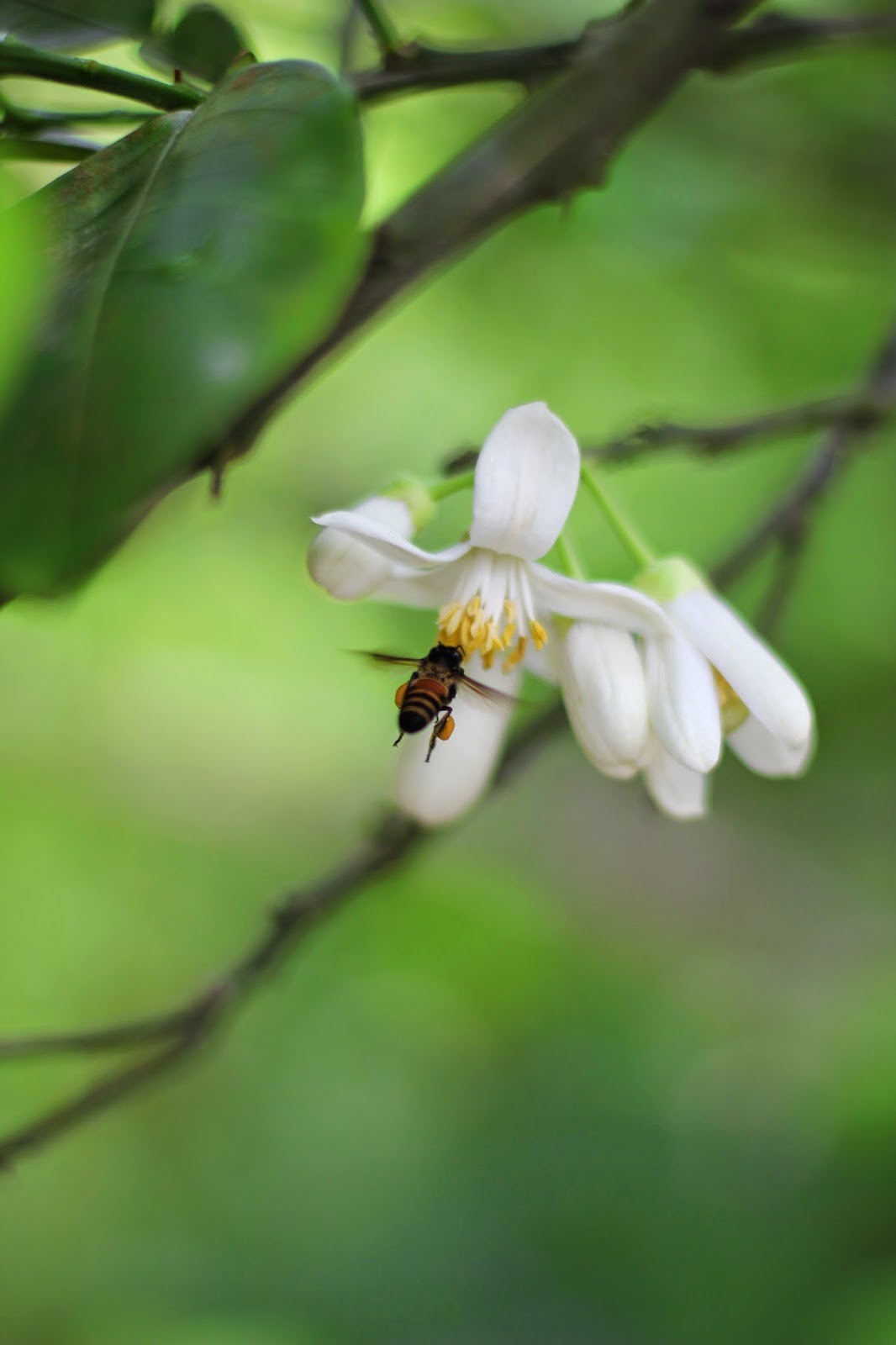
The Senduduk and The Bee

    Infobites: Did you know that this sweet purple and yellow shrub has many uses for both humans and animals? The plant is commonly found in many wild places in South East Asia (including coastal area) is  known as the Singapore rhododendron although it is not a rhododendron.The sour young leaves of these plants are not only edible, its roots and leaves are used in traditional treatments of diarrhea and dysentery. When powdered, these leaves may also be sprinkled over wounds and can be used to treat elephants! Interestingly, the fruits may also be used to produce a black dye to yield a very juicy artwork

Adapted from: http://www.wildsingapore.com/wildfacts/plants/others/melastoma/malabathricum.htm


Plaintain Squirrel

Greater Racket-tailed Drongo


The Road Not Taken


Everything is connected...

Lalang... People...


Almira and Becky teaching the Greenbeans the Lalang game that they learnt from locals at the Sei Betung Reforestation Site in Sumatra


Monday, 30 December 2013

GPS Sumatra (May-June)

Earlier on in May this year, Becky and I spent 16 days with 13 schoolmates from SOTA and 2 teachers in the Sumatran rainforest, learning from and working with the Restoration team there, doing Reforestation work as well as conducting environmental based programmes for primary schools there.
This was part SOTA's Year 5 Global PerspectiveS (GPS) program.

Click on the link below to read more about my thoughts as the 16 days progressed.
It was a very meaningful and musical journey, learning about the forest, the issues with oil palm plantation encroachment, and the most important discovery - learning about ourselves and our connection with our natural environment.

Read about our journey here

Have a very happy new year!

~Almira, Green Beans.

Thursday, 26 December 2013

The simple act of eating fish


View from the Moon Rock
Taken by Ms Kong

In early November, Almira and I went on a school expedition to the Anambas Islands 1 day from the coast of Batam. For a period of ten days on the South China Sea, we sailed on Captain Blake's Four Friends with 12 other students. During the expedition, we spent out time kayaking and snorkelling in the crystal blue waters as well as combing the white beaches of uninhabited islands.
Having participated in many environmental activities in 2013 such as starting the environment group, the Green Beans I have had frequent opportunities to preserve nature. However, my participation in this expedition has prompted me to reflect on the environmental friendliness of outdoor sports and expeditions such as these.


Firstly, my hesitation for such outdoor activities was seeded when we hauled our kayaks across an extensive live coral bed due to the low tide on the third day. This accident which culminated in a brief bout of night kayaking was unforeseen but bore profound effects on many corals.


Lugging our kayaks across the coral bed
Taken by Ms Kong


 This was compounded on the third day of the expedition when we "scrambled" up a 30 m high black rock. In the process, Almira and I began identifying the types of forest on the island. Interestingly, the medium sized island foliage was similar to that of Singapore and would probably have been the same if the islands were inhabited. Nevertheless, the island betrayed that it was indeed a secondary forest as seen by the well trodden paths. Why was that so? A shorter, mowed undergrowth of sprawling plants soon betrayed the old marks of mankind’s hands, probably for agricultural purposes.

Emerald Lagoon, Pam's Island (centre) and Sobreno Island (right) at Pulau Bawa
Taken by Amrita
At the top, the Captain told us a short story about the future of the island. In approximately 10 years or even less, Pulau bawa would be transformed into a resort for tourists to immerse themselves in the natural beauty of the island. Often, throughout the trip, the Captain would wax lyrical about how we should have been born 40 years ago to see the bustling marine life. For instance, turtles and whales were once spotted frequently in the serene, rippling lagoon from the rock that we had just climbed.

The white, lifeless smoke snaking in the distance, eating away at the dense trees could only mean one thing. People. Material laden boats would soon follow shortly into the tranquil lagoon bearing their toxic, metal cargo. The pristine, colourful corals we had snorkelled in yesterday would probably crumble sooner or later under such an unnatural load. Upon reflection, I recalled the beach resorts that I had visited and wondered if the value of mankind’s temporal pleasure for a short 5 days was valued over the potentially marine life that probably once was much more abundant than the few we ‘ooh and ah’ over.

Whilst descending the rock, I realized that we were also chopping down the very plants we claimed to protect. Every little action we created killed one plant (as insignificant as that may sound). But the plant is more than a plant. It is a young tree that will take another 5-10 years to grow again to where it was or maybe never grow again.

Were we much better than the men building the resort? Were these outdoor expeditions creating their own tiny environmental impact instead? This led me to realize the importance of ‘ecotourism’ and an environment ethos when travelling. Often, it is easy to forget the implications of our actions when we possess the ‘I want to have fun’ mentality. If we want to protect the beautiful wildlife that we encountered and ensure that 40 years down the road our future generations can enjoy the same crystal, aquamarine seas, our actions to minimise impact is a prerogative. I realized that it is not about being anal but being considerate.

A scared clownfish (not Nemo) at Turtle Reach, Pulau Bawa
Taken by Ms Kong

Another issue eating and environmentally consciousness was raised once again during the trip when a group of us decided to eat oysters and sea urchins in an uninhabited island on the 9th day. Previously, we had learnt to pluck coconuts and catch sea urchin the day before around Rainbow Cracker Beach and Pulau Acah in the SOTA archipelago. That day we began to consume large quantities of oysters clammed to the rocks and hunting for sea urchins. However, some people were clearly disturbed by this action and brought it up later that night. Upon the reflection, I realized that I had caught a sea urchin with the same ‘I want to have fun’ mentality. If no one had eaten the sea urchin, I would have killed out of excess. Thus the lesson was learnt that just because these creatures don’t have large eyes and fur doesn’t mean that they deserve to die.

Nevertheless, I personally think that being careful when eating doesn’t equate to completely rejecting meat when it is offered. During a discussion with friends when we were stranded amidst the coral beds on the second day, we concluded that rejecting the meat resulted in more food wastage if no one was willing to eat it. This would mean that the animal’s life which was sacrificed for the meal was wasted. In the one of the later days, we experienced this when we killed fishes caught by the locals (one of them was a rainbow fish). Initially, many of us felt irked at the idea of consuming a life. Mutely, we watched the final, painful breath of a beautiful brown and black striped fish as one of us hacked it apart. However, not eating the fish also mean that the fishes were killed in vain. Almira's philosophy (which I fully agree) is that it is more worthwhile to consume and appreciate the value of the fish's life instead.

The meal before the chopping
Taken by Ms Kong

Living in an industrialized city like Singapore often disconnects us from the roots of food. I too find myself forgetting that the soya sauce doused steamed meal decorated with fried garlic on the table was not just a frosty ice block in the supermarket but a live, flopping fish in the sea. After the bloody incident, many people expressed that they will not eat fish for a long time after witnessing the death of one fish. How ignorant we must appear to be in the eyes of the locals! However, this points us to a larger problem that we Singaporeans lack the practical experience of basic skills. This is probably the reason why we conduct outdoor activities like these. Through this experience, students are able to appreciate nature which is unobstructed by concrete towers or muddy waters. Nevertheless, we must also remember that our actions inevitably impact environment and enjoy the breathtaking views with restraint (e.g refraining from overconsumption of sea urchins or the amount of plastic waste generated). But aside from making resolutions to be environmentally conscious in the future during expeditions, why not start now from home and start reducing the amount of waste thrown away?
 
Credits: All the photos in this entry were taken by members on the trip (Ms Kong and Amrita).
Note, the contents may not be approved by the Grammar police as this was adapted from a reflection.

Written by Qing